Aloo Gobi is one of those simple and comforting sabzi that we make again and again in Pakistani homes. This version combines potatoes and cauliflower with a flavorful tomato-based masala. It’s the same Punjabi recipe of Aloo Gobi that my family has been making for years and it’s one of my favourite ways to cook it. It’s easy to make, uses simple ingredients, and still turns out full of flavor every time.
🥔 What Is Aloo Gobi?
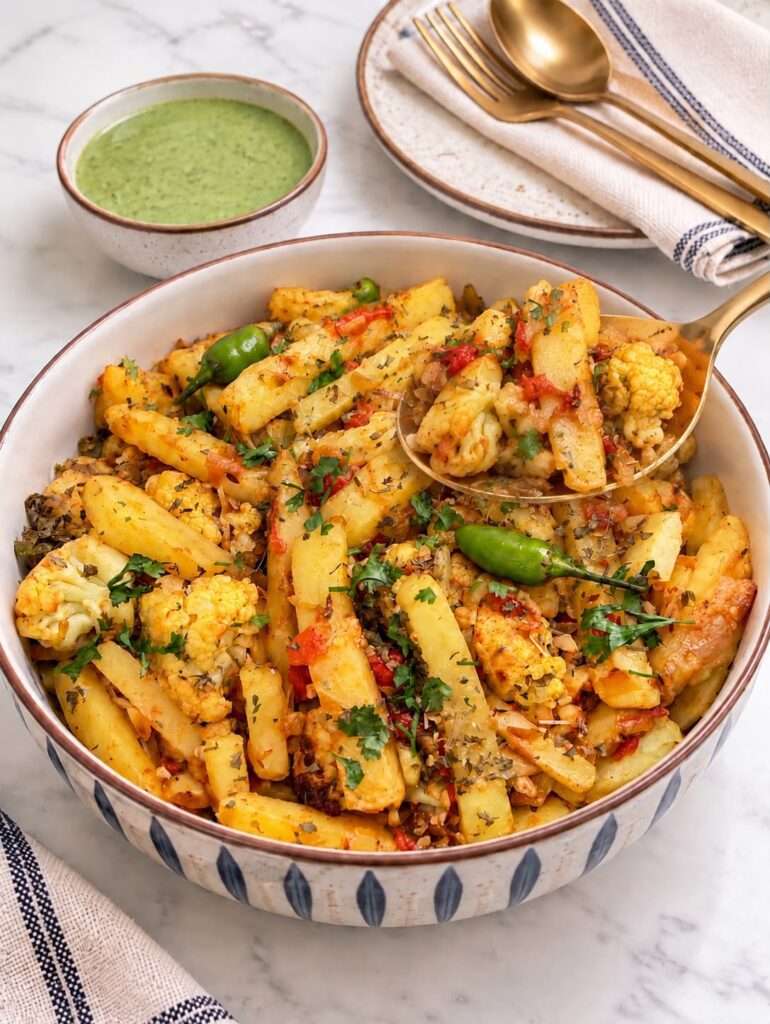
Aloo Gobi is a classic Pakistani and Punjabi vegetable dish made with potatoes and cauliflower. Aloo means potatoes and gobi means cauliflower in Urdu, and while the basic ingredients stay the same.
Every household has its own way of making it. In this recipe, I cut the potatoes into wedges and cauliflower into bite-sized pieces, brown them first, and then cook them in a simple tomato-based masala. Why brown them first? Because frying the vegetables enhances their texture and brings out more flavor.
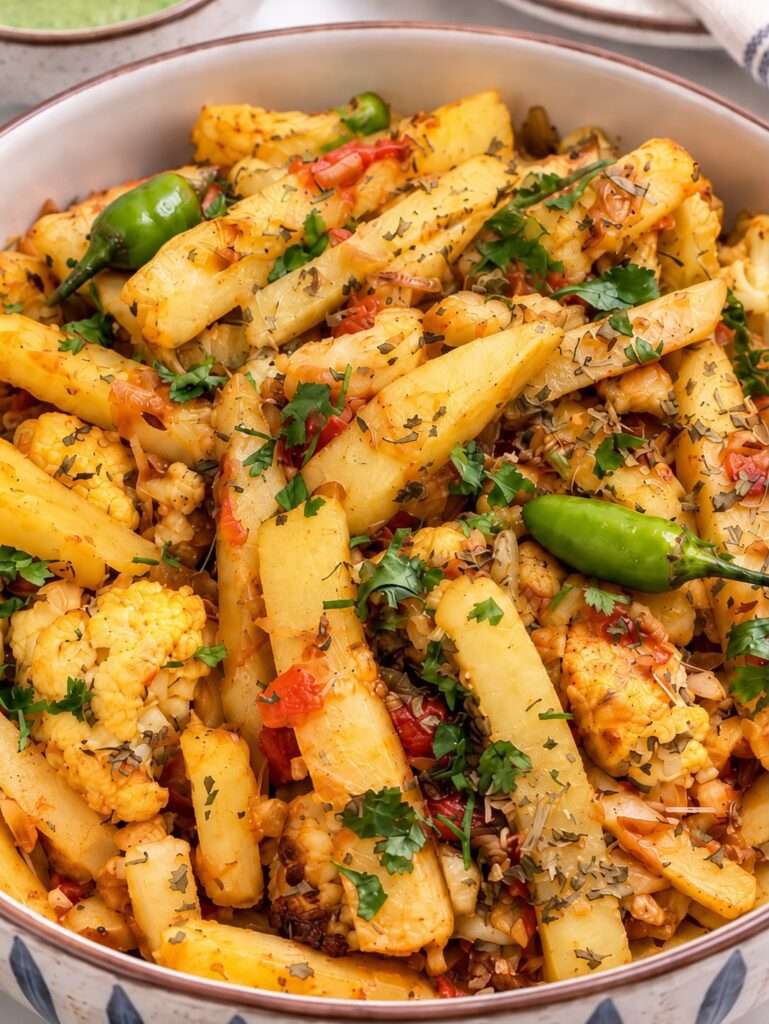
Aloo Gobi is more of a dry sabzi than a salan curry, so you won’t find a lot of gravy or sauce in it. There are also different ways to cook it, like you can make it in a regular pan, or pressure cooker but I personally prefer the pan method because this recipe is simple enough that you really don’t need any special equipment. It’s an easy everyday dish that works beautifully with roti or paratha!
📝 Ingredient Notes
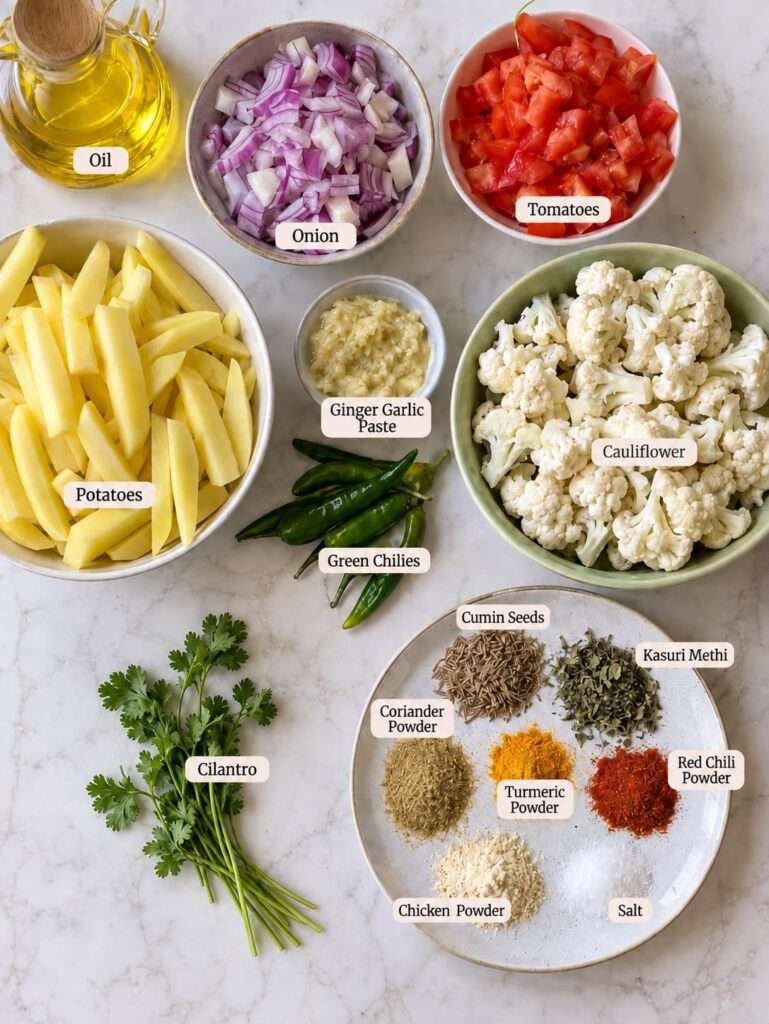
- Cauliflower: Cut into small, bite-sized florets. If any florets are large, simply cut them in half.
- Potatoes: Cut into medium-sized wedges, not too thick or too thin – similar to thick-cut fries.
- Onion: Finely chopped
- Tomatoes: Chopped
- Chicken Powder: For depth and rich flavor to the masala.
- Basic Spices: Salt, red chili powder, turmeric, coriander powder and cumin seeds!
- Kasuri Methi: Rub it gently between your palms before adding it to the masala.
- Lemon Juice: Optional, but highly recommended! Squeeze 1 lemon over the Aloo Gobi curry just before serving.
🥘 How To Make Aloo Gobi
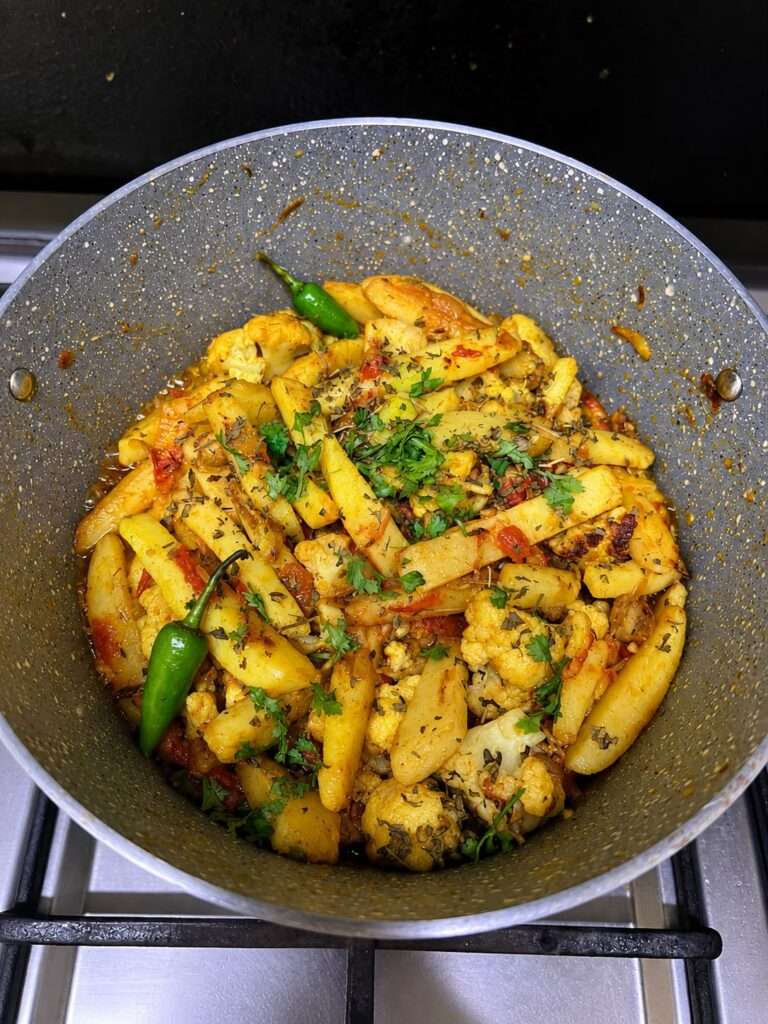
👩🍳 Cooking Tips
- Fry the potatoes first. Yes! Start by frying the potatoes, and once they are nicely sautéed, add the cauliflower. Cook both vegetables only until they are about 60% done. They will finish cooking later with the masala.
- Don’t add too much water. Fresh cauliflower and potatoes usually release enough moisture while cooking, so you don’t need to add water to the recipe. If the potatoes are taking longer to cook and the outside is done but the center is still firm, add only 3 tablespoons (¼ cup) of water. Avoid adding more, as Aloo Gobi should stay relatively dry.
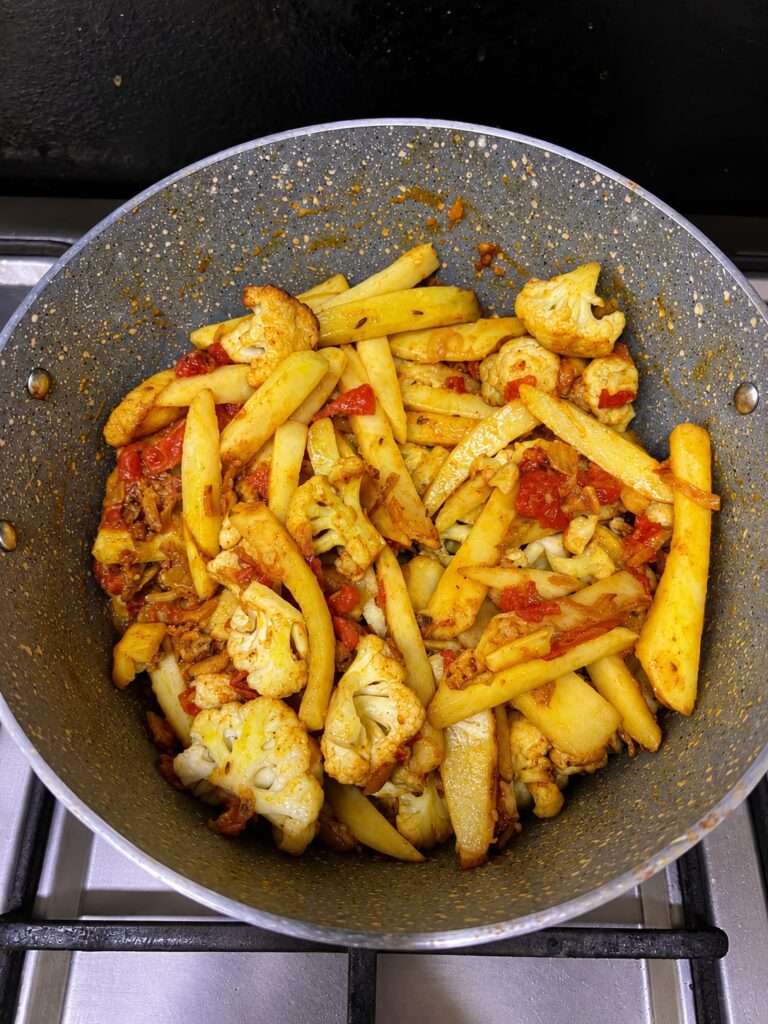
- Don’t keep stirring! Once you fry the vegetables, let them cook without constantly stirring. Turn them gently from time to time so they cook evenly. Too much stirring can make the vegetables break apart and turn the masala mushy.
- Give firm vegetables more steaming time. If your potatoes or cauliflower still feel firm, increase the final dum (steaming) time from 5 to 10 minutes. Keep the heat low and let the vegetables finish cooking gently.
⭐️ How To Get Perfectly Cooked Aloo Gobhi
- Make sure your cauliflower isn’t frozen, old, stale, or dried out. And for potatoes, use russet or golden ones! Fresh vegetables make a big difference to both the taste and texture of the finished dish.
- No matter how good the curry is, if the spices taste bland, the dish won’t have much flavor. This rule goes out for any sabzi recipe!
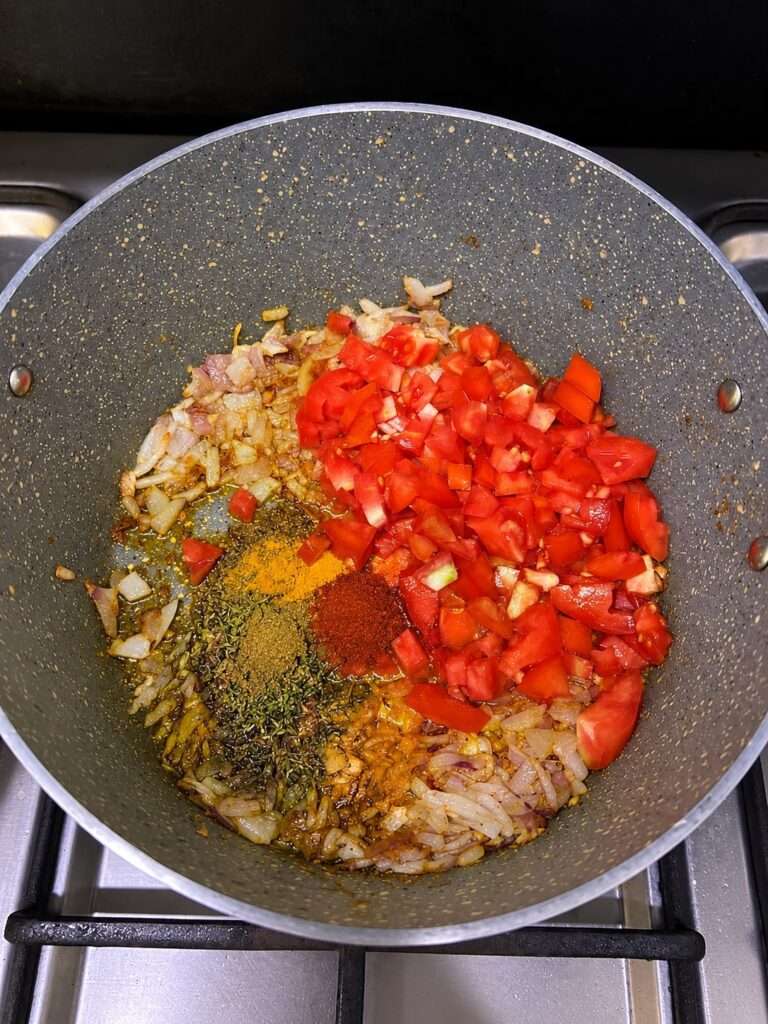
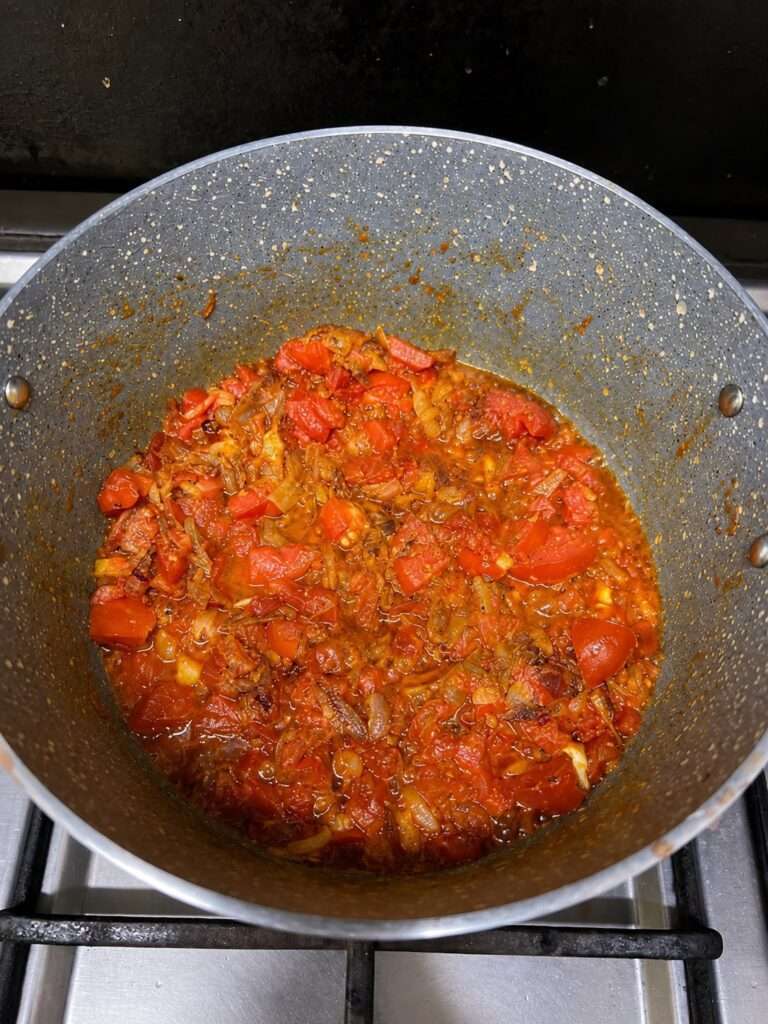
Pay attention to the salt, chicken powder, and lemon juice, and don’t skip these ingredients. - Before adding the potatoes and cauliflower, your onion and tomato masala shouldn’t be completely dry. It should have a nice, thick, jammy texture so it coats the vegetables well when you add them. So you don’t need to add extra water later!
🥬 Dry Aloo Gobi Vs. Gravy Aloo Gobi
There are different ways to prepare this classic vegetable dish. The version I’m sharing here is a dry Alu Gobi, or you can call it a stir-fry-recipe!
A gravy Aloo Gobi recipe is made differently. Instead of frying the vegetables first, you cook them directly in a tomato-based masala with water until tender. It has more gravy (more like aloo gobi curry) and pairs especially well with rice!
My family (kids) personally prefer the dry version because it has so much more flavor and texture. Whether it’s Aloo Baingan, Bhindi or any simple sabzi!
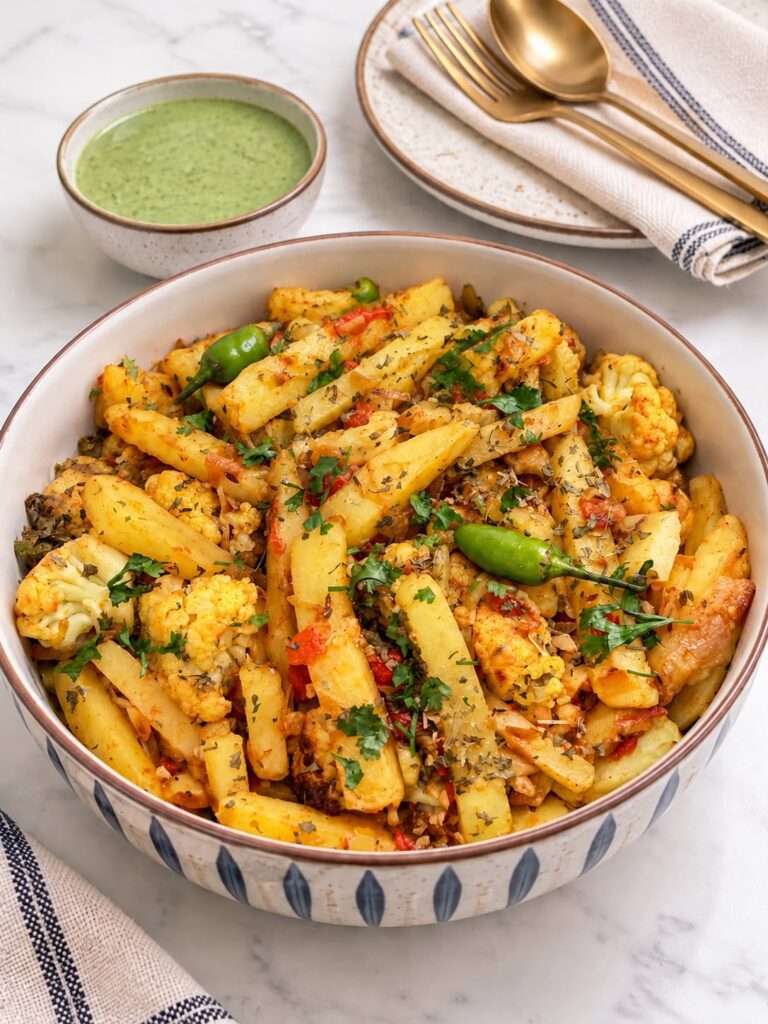
🍲 What To Serve With Gobi Alu?
Let me reveal another way to enjoy it: mash the leftover dry Aloo Gobi and use it as a filling for parathas. You can do this the next day or even while it’s still fresh. Trust me, Aloo Gobi parathas with a side of chutney are a hit and you may never want to eat this sabzi any other way!
Apart from enjoying it on its own, dry stir-fried Aloo Gobi also pairs really well with chicken curry and rice.
❓FAQ’s
How do you keep Aloo Gobi from getting mushy?
The key is not to overcook the vegetables and to avoid adding too much water. I cook the potatoes and cauliflower just until they are tender and still hold their shape.
Can I make Aloo Gobi with gravy?
Absolutely. If you want a gravy version, simply add water to the tomato-based masala instead of keeping it thick and jammy. Once you add the vegetables, the masala will already have a gravy-like consistency. You can adjust the amount of water according to how much curry you want but about ½ cup of water is generally enough.
Why do you fry the potatoes and cauliflower before adding them to the masala?
Whenever you fry vegetables in a little oil before adding them to the masala, they retain more of their texture and develop a deeper, more flavorful taste. It also gives the vegetables a nice roasted flavor.
Can I use frozen cauliflower for this recipe?
Of course you can, but I prefer fresh cauliflower. Frozen cauliflower contains more moisture, which can make the sabzi softer and reduce that fresh, slightly crunchy texture. For a dry vegetable dish, I find that fresh cauliflower gives much better results.
How do I know when the potatoes and cauliflower are cooked?
Check the potatoes with a toothpick or the tip of a knife. Insert it into the center of the potato, rather than just checking the sides. If the center feels tender and soft, the potatoes are cooked. The cauliflower should also be tender at this stage, but still hold its shape.
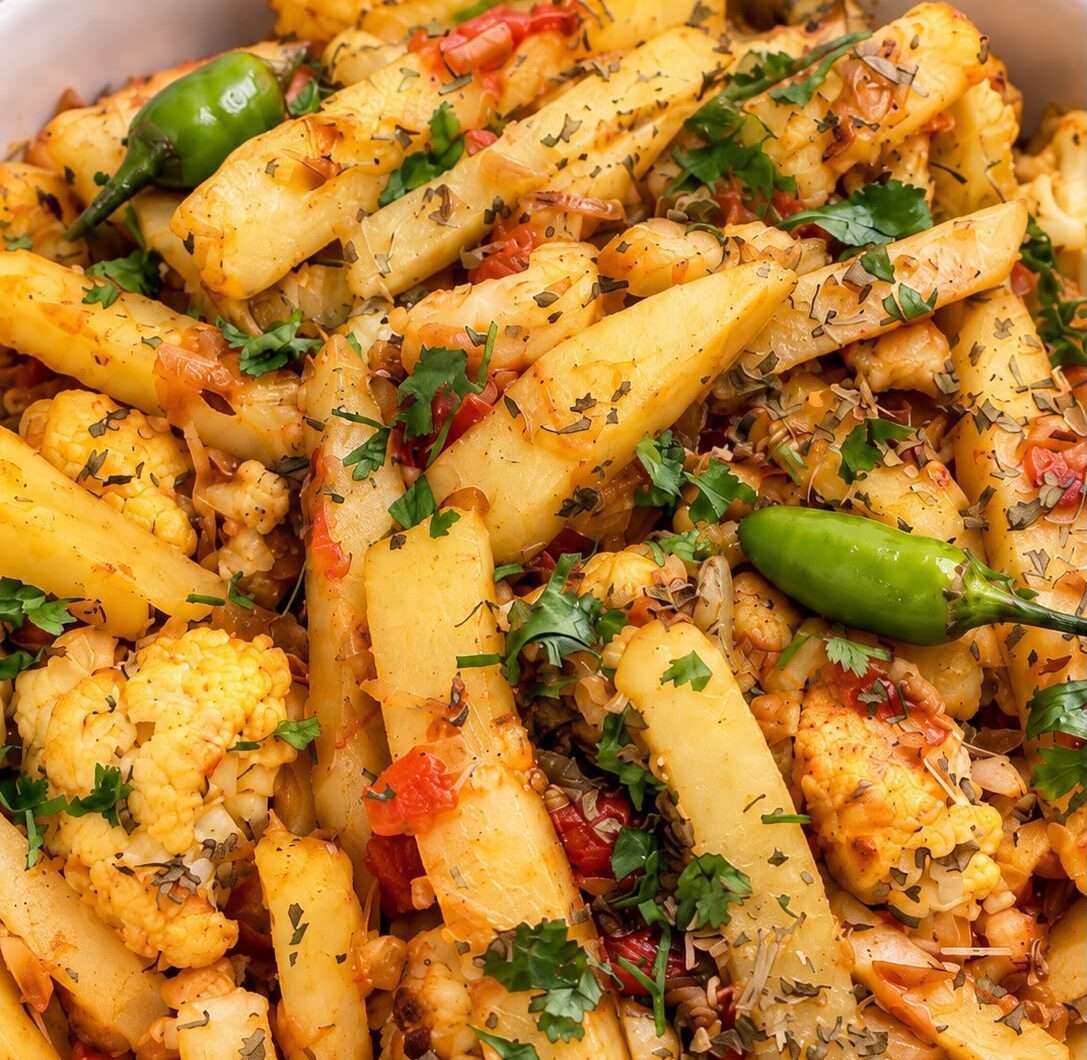
Aloo Gobi – Cauliflower And Potato Curry
6
servings10
minutes30
minutes265
kcal40
minutesTry this homemade Pakistani Aloo Gobi, made with potatoes and cauliflower cooked in a tomato-based masala. An easy, delicious dry sabzi for everyday meals.
Ingredients
1 small head cauliflower, cut into bite-sized florets (about 1 cup)
3 -4 medium -sized potatoes, cut into wedges
1 large onion, finely chopped
3 medium -sized tomatoes, chopped
1/2 cup oil
4 tbsp water, only if needed
- Herbs and Spices
1 tsp cumin seeds
1.5 tsp ginger garlic paste
1 tsp salt
1 tsp chicken powder
1 tsp Kashmiri red chili powder
1 tsp coriander powder
1/2 tsp turmeric powder
- Garnish
1 tsp kasuri methi
1 tbsp lemon juice,
1 handful cilantro, chopped
2 -4 green chilies, chopped
Directions
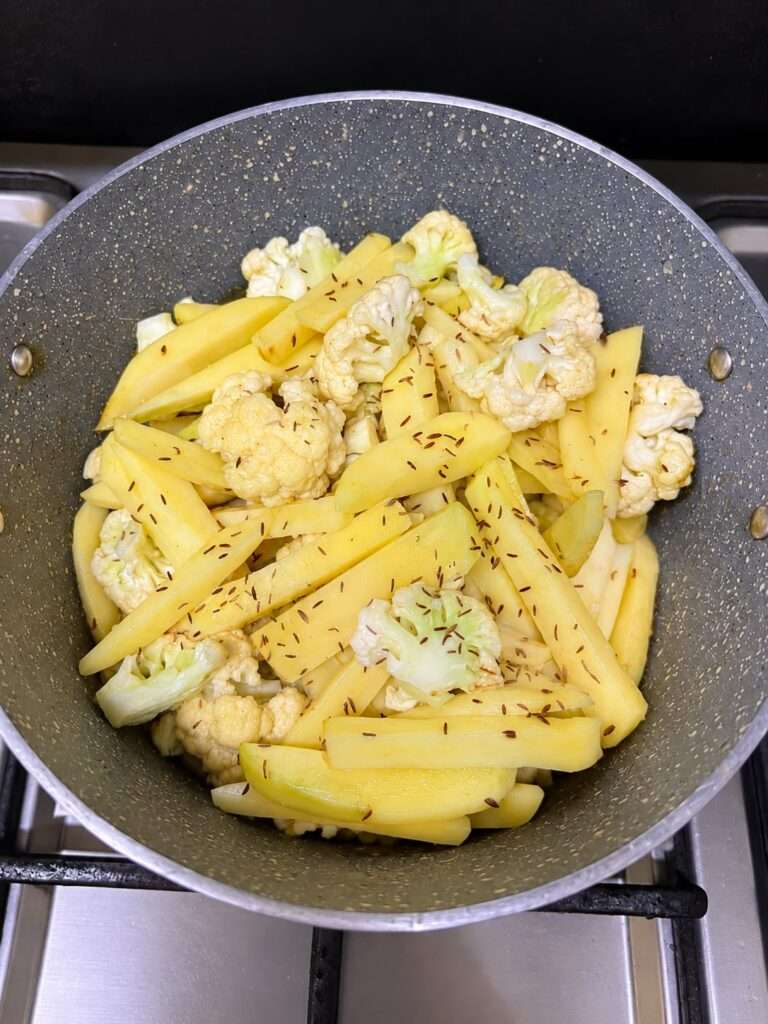
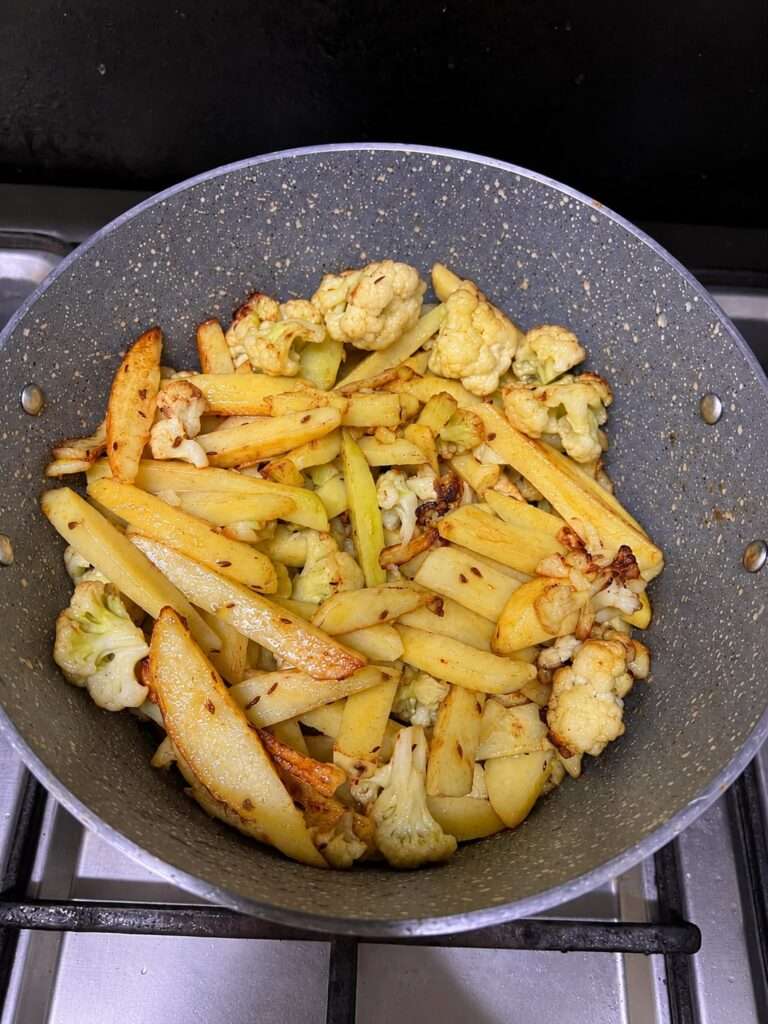
- Heat oil in a pan over medium-high heat and add cumin seeds. Add the potato wedges and fry them for a few minutes. Then add the cauliflower florets and continue frying both vegetables for about 4–6 minutes, until they start to change color and develop a light golden, roasted look. Don’t cook them completely at this stage because they will finish cooking later with the masala.
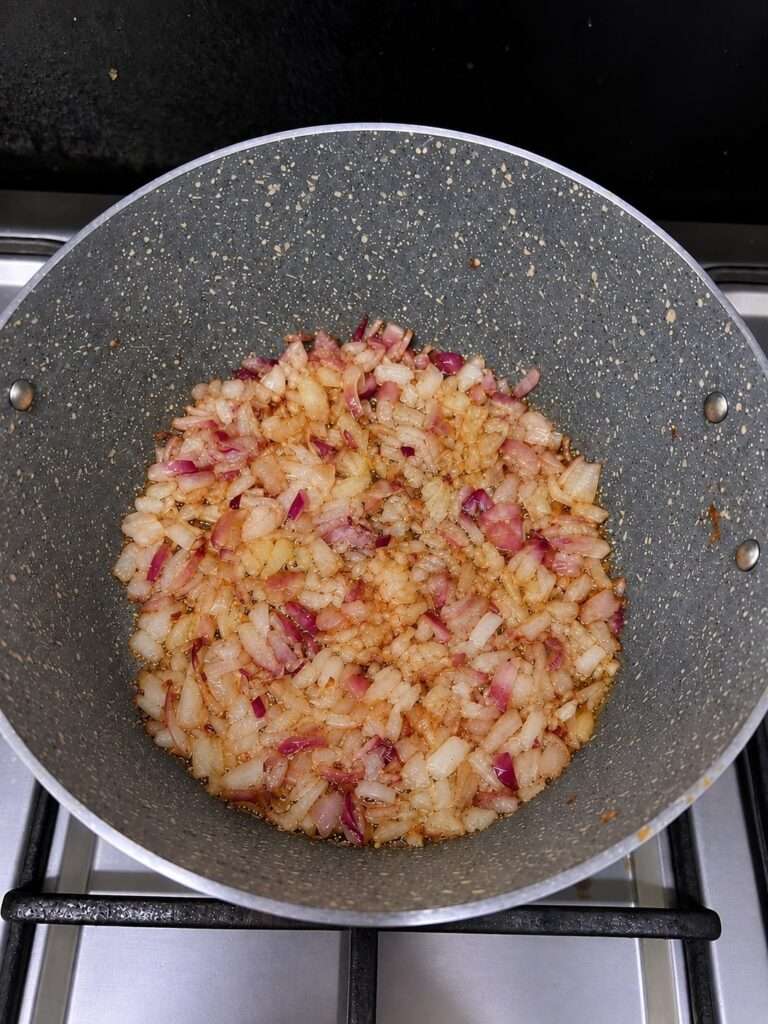
- Once the potatoes and cauliflower are nicely browned, remove them from the pan and set them aside. In the same pan, add the chopped onion and ginger garlic paste. Fry over medium heat until the onion turns nicely golden and the raw smell of the ginger garlic disappears.
- Add the powdered spices and chopped tomatoes to the browned onion. Cook everything together, stirring occasionally, until the tomatoes soften and the mixture turns into a thick, jammy masala. Make sure the masala is well cooked and flavorful before adding the vegetables.
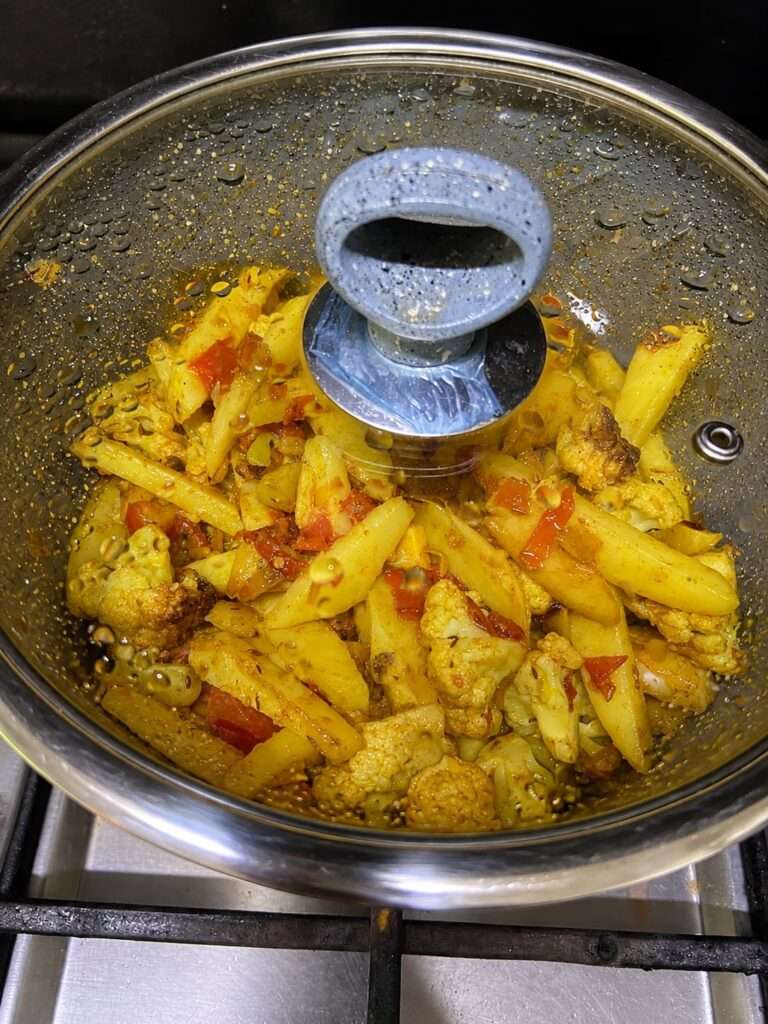
- Add the fried potatoes and cauliflower back into the pan. Gently mix them with the masala until the vegetables are coated. If you feel the potatoes are still too firm to cook through with the lid on, add about 4 tablespoons (¼ cup) of water. Cover the pan and let the vegetables cook until tender.
- Keep the heat lowest and cook for 7–9 minutes. Let them cook gently in the masala without constantly stirring.
- After 3–5 minutes, check the potatoes with a toothpick or the tip of a knife. Insert it into the center – the potatoes should feel tender and soft. Once the vegetables are cooked and the oil has separated from the masala, add kasuri methi, lemon juice, green chilies, and fresh cilantro.
- Cover the pan again, turn off the flame, and let the vegetables rest for a few minutes so they can absorb all the flavors from the garnish. Serve hot!
Notes
- If the potatoes are still firm after the initial cooking, you can give them a little more time rather than immediately adding a lot of water. If they genuinely need moisture, add only a small amount of water.
- Once you add the fried vegetables back to the masala and cover the pan, avoid stirring them too often. This helps the potatoes and cauliflower stay intact and keeps them from becoming mushy!